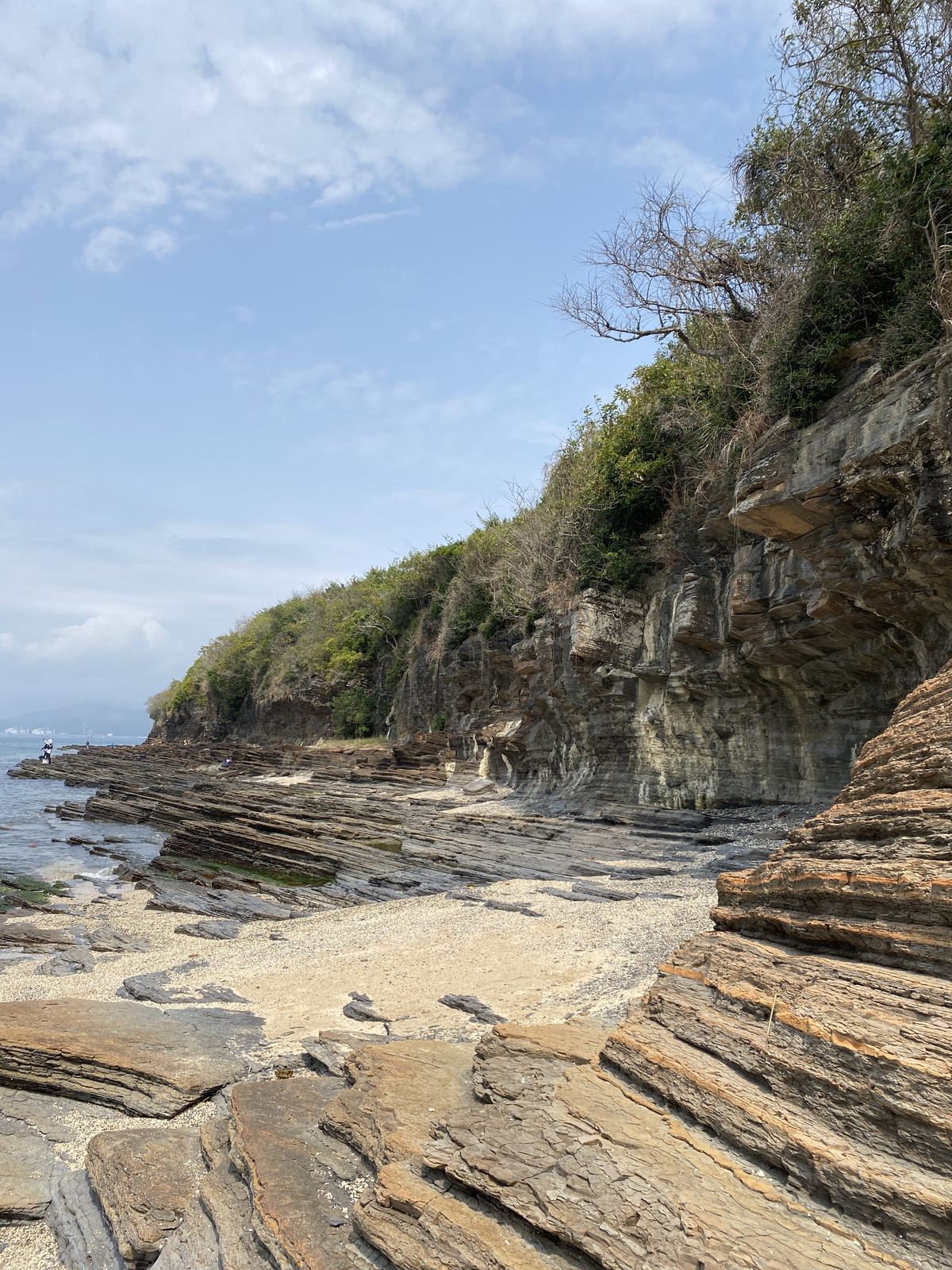
Discover the fascinating geological history beneath Hong Kong — from ancient Devonian rocks to spectacular hexagonal volcanic columns.
About 1,000 million years ago, the continental basement of Hong Kong (the Cathaysia Block) collided with the Yangtze Block in a convergent margin tectonic setting. By about 600 million years ago, a large part of southeastern China was submerged beneath a shallow continental sea. By 400 million years ago, sediments from rivers and their deltas were being deposited in the Hong Kong region. These sediments now form the oldest rocks in Hong Kong, which are sedimentary rocks of the Devonian Bluff Head Formation.
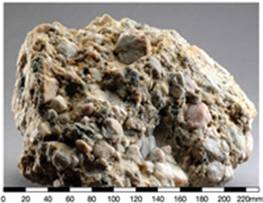
Devonian rocks occur at two main locations in Hong Kong: on the northern shore of Tolo Channel and at Ma On Shan. They include layers of conglomerate and sandstone. Fragments of fossil fish (placoderm) were discovered in 1980 in the sedimentary rock layers at Harbour Island, confirming the Devonian age of the rocks. The Devonian conglomerates are white in colour and contain rounded pebbles of quartzite set in a matrix of coarse quartz-rich sand. The sediments were deposited in fluvial and deltaic environments.
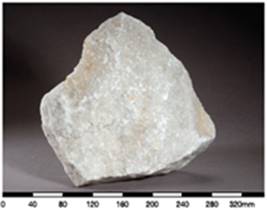
Marble occurs in the northwest New Territories. It is not exposed at the surface, but is buried beneath thick sediments on the Yuen Long Plain. The marble is metamorphosed limestone, which was originally deposited in a warm and shallow sea environment. Pure marble contains more than 95% crystalline calcite minerals that are readily dissolved by weakly acidic groundwater. Solution cavities occur in the marble, which have resulted in the development of a karst topography (now buried).
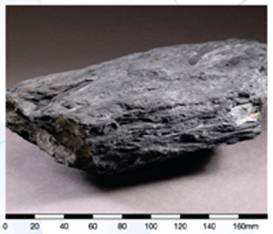
The Lok Ma Chau Formation is distributed in the northern New Territories. It comprises mainly metamorphosed sedimentary rocks, including meta-conglomerate, meta-sandstone, meta-siltstone, quartzite and graphite schist. Quartzite is composed mainly of recrystallised quartz with some tiny flakes of sericite mica. Graphite schist is dark black in colour and shows well developed metamorphic foliation.
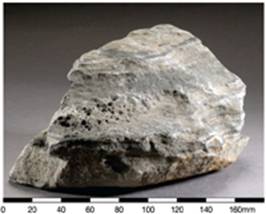
Rocks of Permian age are found in Tolo Harbour, mainly on Ma Shi Chau. They are greyish siltstones and mudstones that contain pyrite minerals (iron sulphide). The sedimentary layers on Ma Shi Chau are commonly deformed by slump folding. Several marine fossils have been identified in the siltstones and mudstones, confirming a Permian age and indicating deposition in a near-shore tidal flat environment.
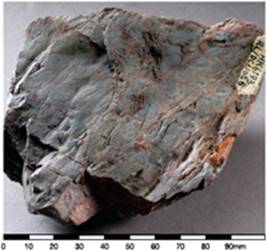
Early Jurassic rocks occur as small exposures at Sham Chung, Fung Wong Wat and Tai Tong. They consist of grey to greyish white thinly bedded siltstone and mudstone with lenses of sandstone. In 1924, the first fossil in Hong Kong, an ammonite (Hongkongites hongkongensis), was discovered embedded in the mudstone on the northern shore of Tolo Channel. This confirmed the age as Early Jurassic.
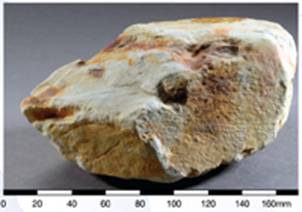
The Tai O Formation is exposed along the coast from Tai O to Sham Wat Wan in the western part of Lantau Island. These sedimentary rocks include alternating layers of sandstone and siltstone and show a variety of sedimentary structures such as cross bedding and shrinkage cracks. Plant fossils have also been found in the Tai O Formation.
Evidence for the oldest volcanoes in Hong Kong occurs in the Tuen Mun area, where a relatively small volume of volcanic ash and lavas rich in calcium, sodium, iron, and magnesium aluminium silicate minerals are exposed. They are about 180 million years old and probably represent the remnants of a chain of andesitic stratovolcanoes. Volcanic ash and lava rich in silica, potassium, sodium and iron aluminium silicate minerals were erupted from large caldera-type volcanoes between 165 and 140 million years ago in four distinct episodes.
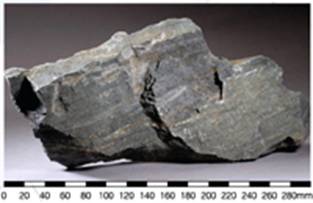
The Tuen Mun Formation comprises andesitic volcanic rocks and volcaniclastic sedimentary rocks distributed along the Tuen Mun Valley. Andesite lava is common in the upper part of the formation — dark grey, very fine-grained with sporadic epidote mineralisation giving a greenish colour.
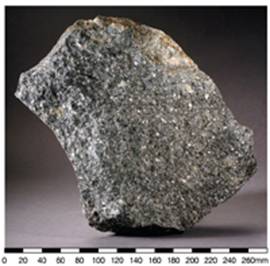
Exposed in the northeastern and northwestern New Territories. Dominant rock type is coarse ash crystal tuff composed of crystal fragments of quartz, feldspar, hornblende and biotite. Tuff breccia at Shek Lung Kung comprises angular rock fragments up to 6 m in diameter — deposited close to a volcanic vent.
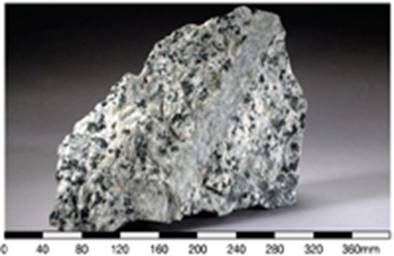
Occurs mainly on Lantau Island with isolated outcrops in Tuen Mun, Soko Islands, and Lamma Island. Grey in colour, containing quartz, plagioclase feldspar and alkali feldspar with very large alkali feldspar crystals (5–15 mm).
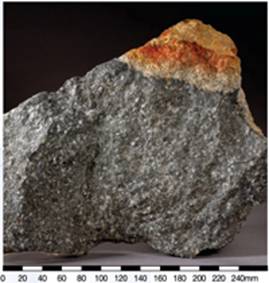
Exposed on Lantau Island and at Lai Chi Chong. Contains crystals of quartz and feldspar with distinct flow structures. Volcaniclastic rocks at Lai Chi Chong show well-bedded layers with soft sediment deformation structures. In places, the ash was so hot it fused to form lava — a process called welding.
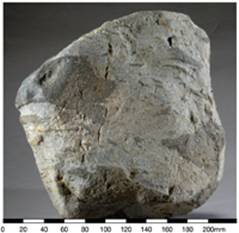
Exposed in southern Hong Kong Island, eastern Kowloon and Sai Kung. Displays eutaxitic foliation — a welding structure from hot pumice fused and compressed. The third episode is particularly complex with at least two calderas.
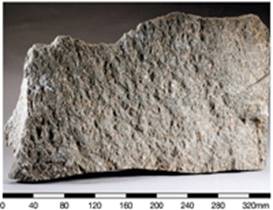
At High Island and Ninepin Islands, forms spectacular hexagonal columns. The tuff is slightly reddish, very fine-grained, developed when hot volcanic ash ponded, cooled and contracted — from a cataclysmic eruption about 140 million years ago. The final episode culminated with one extremely explosive eruption; following caldera collapse, an enormous volume of ash accumulated to a minimum thickness of 400 metres.
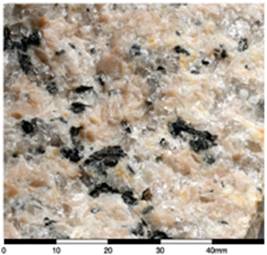
Forms a roughly circular intrusive body centred on Victoria Harbour. Generally medium-grained equigranular with pinkish grey colour, containing quartz, plagioclase feldspar, alkali feldspar and biotite.
Between about 140 and 50 million years ago, the Hong Kong region was part of a landmass. Tectonically, the region was relatively stable, except for the development of several block-faulted basins. The climate was hot and dry.
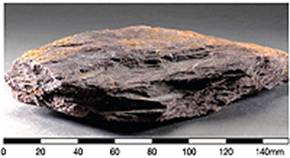
Occurs in the northeastern New Territories forming the prominent Pat Sin Leng escarpment. Greyish white conglomerate with subrounded pebbles of volcanic rocks, mudstone and reddish sandstone. Deposited in river channels soon after the cessation of volcanic activity.
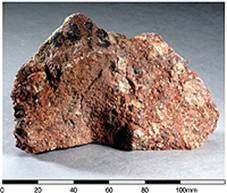
On Port Island, reddish brown layers of conglomerate and sandstone with cross-bedding, deposited in river channels.
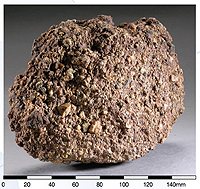
Exposed on scattered outlying islands in northeastern New Territories, including Crooked Island and Ap Chau. Breccia, conglomerate, sandstone and siltstone cemented by calcite, varying from reddish brown to greyish white. Probably eroded from a fault scarp and deposited as an alluvial fan.
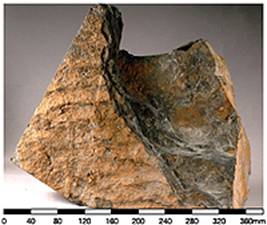
The youngest rock formation in Hong Kong. Thin layers of siltstone gently inclined towards the northeast. Fossil insects and bituminised plant fragments have been discovered. The sediments were deposited within a lake that periodically dried up, leaving gypsum crystal moulds later filled by secondary minerals including aegirine, calcite, zeolite and acmite.
The Quaternary Period (from about 2.6 million years ago to present) is characterised by cyclical climatic changes, during which world sea level periodically fell and rose in response to glacial and interglacial episodes. During cooler glacial periods, sea level was as much as 120 metres lower than today, and the coastline was about 100 kilometres south of Hong Kong. Intervening warming periods melted ice sheets, raising sea level and depositing marine mud over much of Hong Kong waters.
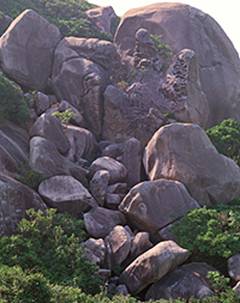
A layer of colluvium blankets most hillslopes, ranging from fine-grained silt and sand to coarse boulders deposited by landslides. Thicker deposits (over 2 m) occur on footslopes, especially over granitic rocks where they derive from deep weathered profiles. Extensive deposits occur at the base of Lion Rock ridge, the Mid-levels, Fei Ngo Shan, Castle Peak, Tai Mo Shan, and on Lantau Island.
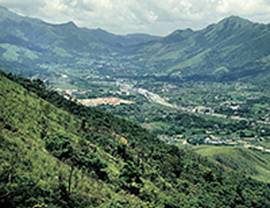
Alluvium fills most stream and river valleys in Hong Kong. Relatively thin, narrow deposits occupy hillside tributaries, while thicker, more extensive deposits floor lowland valleys. It generally comprises coarse-grained sands and gravels in river channels and point bars, and fine-grained sediments on floodplains.
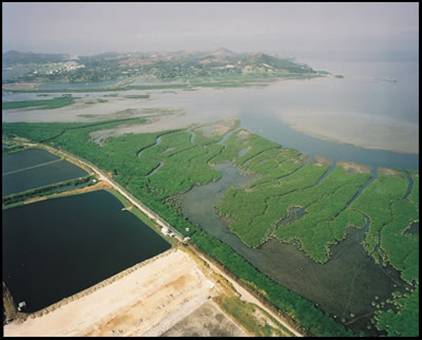
The seabed in Hong Kong slopes gently to the south and southeast and is generally covered with marine mud accumulated since the rapid post-glacial sea level rise ~11,000 years ago. Sand occurs where tidal currents prevent finer sediments settling, and several wide tidal inlets (Deep Bay, Starling Inlet) have accumulations of intertidal mud covered with mangroves.
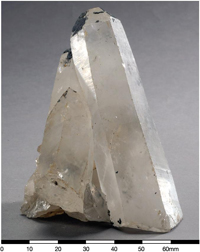
SiO₂
Quartz, usually called silica, is one of the most common minerals in the Earth's crust. Quartz crystals are usually hexagonal and prismatic in shape. Pure quartz is colourless, although impurities may give a range of colours such as violet, pink and orange. Quartz is the raw material for making glass.
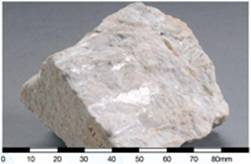
NaAlSi₃O₈ to CaAl₂Si₂O₈
Plagioclase feldspar is a sodium- or calcium-rich feldspar. Crystals usually occur as stubby prisms, generally white to grey with a vitreous lustre. Plagioclase feldspar is an important industrial mineral used in ceramics.
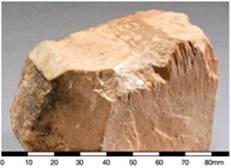
(K,Na)AlSi₃O₈
Alkali feldspar is rich in alkali metal ions. Crystals usually occur as stubby prisms, commonly pink to white. Alkali feldspar is used as raw material to make porcelain.
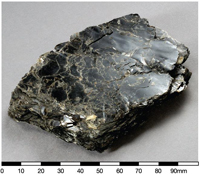
Varies
Micas are a family of silicate minerals containing potassium, magnesium, iron, aluminium, silicon and water. They form flat, book-like crystals that split into individual sheets. Biotite is dark, black or brown; muscovite is light-coloured or clear.
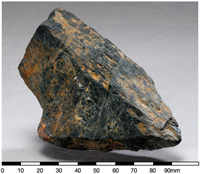
Complex silicate
Amphibole minerals generally contain iron, magnesium, calcium and aluminium as well as silicon, oxygen, and water. They form prismatic or needle-like crystals and are a component of many igneous and metamorphic rocks.
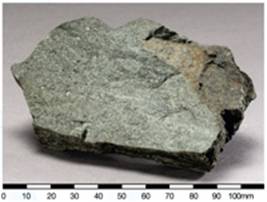
Complex silicate
Pyroxenes generally contain magnesium, iron, calcium and aluminium as well as silicon and oxygen. They form short or columnar prismatic crystals. Precious jade (jadeite) is a pyroxene.
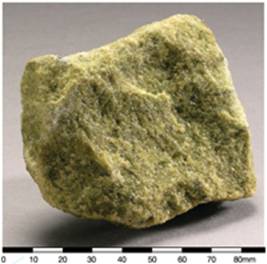
(Mg,Fe)₂SiO₄
Olivine is a green, glassy mineral containing iron and magnesium. It is common in mafic and ultramafic rocks. Clear and transparent olivine crystals are commonly faceted as gemstones.
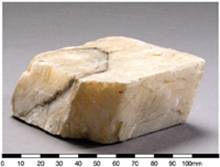
CaCO₃
Calcite is a carbonate mineral, generally white to clear, easily scratched with a knife. It is a common sedimentary mineral and the major component of calcareous sedimentary rocks such as limestone. Metamorphism of limestone produces marble.
Thanks are due to Hong Kong Geological Survey, Planning Division, Civil Engineering and Development Department for kindly allowing us to use their published geological information in this virtual geological exhibition on our website.
Interested in joining our society or collaborating on geology-related projects? Reach out to us or connect through social media. We look forward to hearing from you.